The Handsome Betta Fish
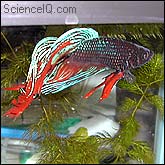
The betta is possibly the most handsome tropical fish out there. We say handsome because it's the male that is the showstopper, with long, flowing fins in brilliant reds, blues and purples. Also called the Siamese fighting fish, the betta is native to the shallow rice paddies, ponds and marshes of Southeast Asia, mainly Thailand, and in 2019 Thailand named it the country's national aquatic animal.
Male bettas are very territorial. Put two males together and they will flare their gills and fins and fight, sometimes to the death, hence the name "fighting fish." People in Thailand have bred bettas for fighting for centuries; a recent genetic study suggests bettas were domesticated at least 1,000 years ago, making them one of the oldest domesticated fish. Wild bettas are small and fairly dull, with short fins. The spectacular colors and long fins of pet-store bettas are the result of careful selective breeding. The species was given its scientific name, Betta splendens, "the splendid betta," in 1910.
Bettas have a special trick. In addition to gills, they have a labyrinth organ, a maze of folded tissue in the head that lets them gulp air from the surface. That's how they survive in warm, shallow, oxygen-poor water. Males also blow bubble nests at the surface and guard the eggs and fry. Bettas are surprisingly interactive: they learn to recognize the person who feeds them and can even be trained to follow a finger. Despite their reputation for living in tiny bowls, they are happiest in a heated, filtered tank of at least 5 gallons (about 20 liters), kept at 76 to 82 °F (24 to 28 °C). With good care, a betta can live 3 to 5 years.