
Bryce Canyon
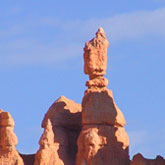 Bryce Canyon is a small national park in southwestern Utah. Named after the Mormon Pioneer Ebenezer Bryce, Bryce Canyon became a national park in 1924.
Bryce is famous for its worldly unique geology, consisting of a series of horseshoe-shaped amphitheaters carved from the eastern edge of the Paunsaugunt Plateau in southern Utah. The erosional force of frost-wedging and the dissolving power of rainwater has shaped the colorful limestone rock of the Claron Formation into bizarre shapes including slot canyons, windows, fins, and spires called 'hoodoos.' Tinted with colors too numerous and subtle to name, these whimsically arranged rocks create a wondrous landscape of mazes, offering some of the most exciting and memorable walks and hikes imaginable.
Ponderosa pines, high elevation meadows, and fir-spruce forests border the rim of the plateau and abound with wildlife. This area boasts some of the world's best air quality, offering panoramic views of three states and approaching 200 miles of visibility. This, coupled with the lack of nearby large light sources, creates unparalleled opportunities for stargazing.
About the Author
NPS National Parks Service
 The National Park Service is an agency of the federal government of the United States that manages all national parks, many national monuments, and other conservation and historical properties with various title designations.