
Vampires
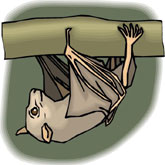 What flying creature can hop, leap, and turn somersaults? Another hint: it can fit in the palm of your hand and weighs about the same as a penny. One more hint: its entire diet is blood. Desmodus rotundus, the vampire bat, packs a lot of punch into its 3-inch body. Using special 'thumbs' on its wings, it can push off into the air to perform somersaults or zip along at a flying rate of six to 12 miles an hour. The thumbs help it keep its balance on terra firma, too - it is the only bat that walks on the ground. The vampire bat uses echolocation to find its way, emitting a sound, inaudible by humans, that bounces off surfaces and reveals the presence of walls, branches, and other animals. It makes other, quite audible noises, too, from a soft purr to a scream or a shriek.
The vampire bat drinks the blood of cows, horses, mules, pigs, chickens, and birds - up to half its weight in one feeding. A keen sense of smell helps it find its prey, and heat-sensing cells around its nose help it zero in on blood vessels near the skin - the easiest spots to reach. But the vampire bat is a polite predator. Often its prey does not even notice its bite, and the amount the bat draws - about two tablespoons of blood - is not enough to endanger the animal. Vampire bats share food with hungry roostmates, one of only a handful of animals to do so. (Hyenas, wild dogs, chimps, and people also share food.) Like cats, vampire bats groom themselves. There's one notable difference, however: vampire bats do their bathing while hanging upside down.
About the Author
Anne Welsbacher
 Anne Welsbacher has focused on science books for young readers,
particularly on the natural sciences. Most recently she authored a book
for middle- and high-school students on the Hawaiian rainforest, for Lerner Publishing. She has written a number of books on individual animals for Capstone Press as well as picture books for very young readers (for Lerner) on various wading birds and brown pelicans.
Anne Welsbacher has focused on science books for young readers,
particularly on the natural sciences. Most recently she authored a book
for middle- and high-school students on the Hawaiian rainforest, for Lerner Publishing. She has written a number of books on individual animals for Capstone Press as well as picture books for very young readers (for Lerner) on various wading birds and brown pelicans.