The Science of Tears
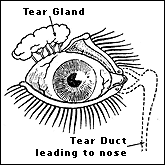
When was the last time you had a good cry? Tears do a lot more than show how we feel, and scientists have found that not all tears are the same.
Tears are made by the lacrimal glands, which sit above the outer corner of each eye, just under the brow. Every time you blink, your eyelids spread a thin tear film over the front of the eye. This film has three layers: an oily outer layer that slows evaporation, a watery middle layer, and a mucus layer that helps the tears stick to the eye. Tears also contain lysozyme and other proteins that kill bacteria, protecting your eyes from infection. Some tears evaporate; the rest drain through tiny openings near the inner corner of each eye into the nose. That's why your nose runs when you cry.
Your eyes make three kinds of tears. Basal tears are produced all the time to keep the eye moist and clean. Reflex tears flood the eye to wash away irritants such as dust, smoke or the chemicals released when you cut an onion. And emotional tears come when we feel sad, hurt, or even very happy.
In the 1980s, biochemist William H. Frey II and his team in Minnesota compared emotional tears with onion tears and found that emotional tears contained more protein. That led to a popular idea that crying flushes stress chemicals out of the body. Later research hasn't confirmed this, though: the amounts involved are tiny. Today scientists think the benefits of crying are mostly about how it calms the body and how it brings comfort and support from other people. Studies suggest many people do feel better after a cry, especially when someone comforts them. As far as we know, humans are the only animals that cry for emotional reasons. So go ahead and have a good cry if you need one.