ScienceIQ.com

Engineering Facts

How We Use Crystals To Tell Time

Quartz clock operation is based on the piezoelectric property of quartz crystals. If you apply an electric field to the crystal, it changes its shape, and if you squeeze it or bend it, it generates an ... Continue reading

Quartz crystal mechanisms, common since the 1930s and 1940s, can keep a watch accurate to within a couple of seconds a month, or one part in a million.

Red Dot Replacing Cross Hairs

A bullet fired from a gun becomes subject to the pull of gravity and begins to fall the instant it leaves the gun barrel. The farther away from the gun the bullet travels, the lower to the ground it ... Continue reading

Non-Flammable Fuel?

When we're flying high above the Earth, few of us give much thought to aircraft safety. We're usually too busy wondering when lunch is going to be served. But flying safely is a goal of NASA's Glenn ... Continue reading

The Air Separation Module (ASM). The 'safety kit' is composed of air separation modules about 4 feet long and 8 inches in diameter.

Taming Twin Tornadoes

Every time a jet airplane flies through the sky, it creates two invisible tornados. They're not the kind of tornados that strike in severe weather. These tornados are called vortices and can cause ... Continue reading

More Engineering Facts


Automation:

  1. Man Versus Machine

Breakthroughs:

  1. X-Ray Astronomy vs. Medical X-Rays
  2. A New Twist on Fiber Optics
  3. Bicycle Chain for Fleas
  4. Cool Fuel Cells
  5. Does Anybody Really Know What Time It Is?
  6. Drip, Drip Water Clocks
  7. Fiber Optics
  8. GPS (Global Positioning System)
  9. Hollywood To The Rescue
  10. How Can A Bullet-proof Vest Stop A Bullet?
  11. How We Use Crystals To Tell Time
  12. Hybrid Cars: The Magic Braking
  13. Infrared Headphones
  14. Liquid Crystal Communication
  15. NASA Hits a Hole-In-One
  16. New York to London in Less Than Two Hours
  17. Non-Flammable Fuel?
  18. Pass the Basalt
  19. Red Dot Replacing Cross Hairs
  20. Searing Heat, Little Package
  21. Seeing In The Dark
  22. Smoke Detectors
  23. Space Lasers Keep Earth's Air Clean

Computer Technology:

  1. Moore's Law

Flight:

  1. A Quick Guide To Gliders
  2. Barn Yard Aeronauts
  3. Big Boom
  4. Guide to Propulsion
  5. High Altitude
  6. Nothing Backwards About It
  7. Taming Twin Tornadoes
  8. The Motion of An Aircraft
  9. The Night Orville Wright Had Too Many Cups Of Coffee

Fluids:

  1. A Shear Mystery

Inventions:

  1. Airbags
  2. Inkjet Printers
  3. The Truth About Atomic And Hydrogen Bombs

Materials:

  1. A Man-made 'Take' on Nature's Style
  2. Alloys
  3. Don't Blow A Gasket!
  4. For Want Of An O-Ring
  5. How Many Cows Does It Take To String A Tennis Racquet?
  6. Making Cars Out of Soup
  7. Solid Smoke
  8. The Right Stuff for Super Spaceships
  9. What Are Composite Materials?

Processes:

  1. Bioinformatics
  2. Dress Sizes The Scientific Way
  3. It's A Bird, It's A Plane -- No, It's A Clam!
  4. X-Ray Images & False Color

Robotics:

  1. Snakebots Coming Your Way
  2. Teeny Tiny Technology

Simple Machines:

  1. Ants Are Wimpy
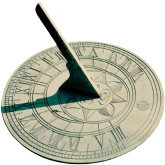
  2. Sundials, Ancient Clocks

Structures:

  1. Hydropower Basics
  2. Leaning Wonder of Engineering