Ice That Burns
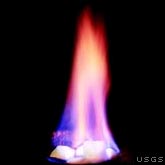
What looks like ordinary ice but fizzes and crackles when you set it on a table, and bursts into flame when you light it? It's methane hydrate, sometimes called "fire ice" or "ice that burns."
Methane is the main ingredient of natural gas: a colorless, odorless, flammable gas, lighter than air. Much of it is made by microbes that break down dead plants and animals where there is no oxygen. In methane hydrate, methane molecules are trapped inside tiny cages of frozen water molecules, a kind of crystal called a clathrate. The structure packs gas very tightly: one cubic meter of methane hydrate releases about 160 cubic meters of methane gas when it melts. When you bring it to the surface, it starts to melt and release that gas, which is why it fizzes and burns.
Methane hydrate forms wherever methane and water meet under high pressure and low temperature. It was first noticed in the 1930s, when it clogged natural gas pipelines in cold weather, and found in nature in the 1960s in Siberian gas fields. We now know it exists in huge amounts in sediments beneath the deep ocean floor, usually below about 300 to 500 meters of water, and under Arctic permafrost.
This ice that burns may hold two important keys to our future. First, it could be an enormous source of energy. The total amount is uncertain, but it may rival all other natural gas reserves. In 2013 Japan became the first country to produce gas from hydrates under the sea, and China has carried out offshore tests since 2017. Getting the gas out economically and safely remains difficult, though. Second, methane is a powerful greenhouse gas, about 80 times more effective than carbon dioxide at trapping heat over 20 years. As oceans and permafrost warm, some hydrates could melt and release methane. Most researchers think a sudden, catastrophic release is unlikely, because most of the methane would dissolve or be eaten by microbes before reaching the air, but scientists continue to monitor these deposits closely. The U.S. Congress launched a national research program on methane hydrates with the Methane Hydrate Research and Development Act of 2000.