What are Hoodoos?
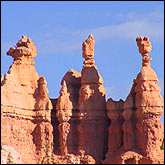
Hoodoos, also called goblins, fairy chimneys or earth pyramids, are tall, thin spires of rock that rise from the floor of dry basins and badlands. They are one of the most spectacular displays of erosion, telling the story of thousands of years of weathering.
Most hoodoos are made of soft sedimentary rock such as sandstone, siltstone or limestone: grains of sand and mud cemented together by minerals like calcite, silica or iron oxide. Rain, running water and wind slowly wear this rock away. Because some layers are harder than others, the rock erodes unevenly. A hoodoo usually has a hard caprock on top that shields the softer layers beneath it, which is why hoodoos often look like spiky or human-like figures. They range from the height of a person to that of a ten-story building.
The largest concentration of hoodoos in the world is in Bryce Canyon National Park in Utah. There, frost wedging does much of the work. Water from melting snow seeps into cracks during the day and freezes at night, and because water expands as it freezes, the ice pries the cracks wider. Bryce Canyon goes through this freeze-thaw cycle on about 200 days a year. The canyon rim wears back by roughly one to four feet every 100 years, so the hoodoos we see today will be destroyed within a few thousand years by the same forces that created them, while new ones are carved out behind them.
Other famous hoodoo landscapes include Goblin Valley State Park in Utah, the badlands around Drumheller in Alberta, Canada, and the "fairy chimneys" of Cappadocia in Turkey.